
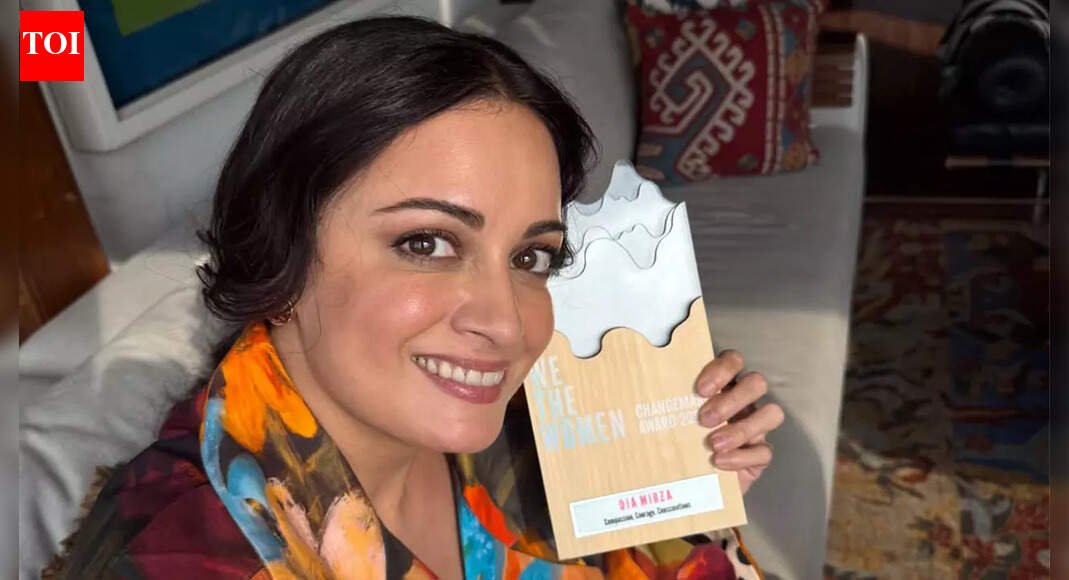
A hush falls over B-town corridors as Dia Mirza lifts the veil on a topic everyone tiptoes around: ageism and the way roles land in Bollywood. The actor, fresh off critically appreciated turns in films like Thappad, Bheed and Dhak Dhak, has sparked an industry-wide introspection with her latest remarks about how age and motherhood intersect with casting—and how that norm is finally shifting.
Key Highlights:
• Dia Mirza addresses ageism and evolving casting practices in a new interview covered by Times of India
• Points to a gradual industry shift toward story-first casting, beyond age-based stereotypes
• Her recent career choices (Bheed, Dhak Dhak) underscore more layered roles for women
• Conversation aligns with broader trend: established actresses leading mainstream projects
The Full Bollywood Gossip Story
The spotlight found Dia Mirza again—not for a red-carpet gown, but for a truth-bomb. In a recent interview reported by Times of India, the actor unpacked how age has long been wielded as a gatekeeper in Bollywood, especially for women. She spoke about casting norms, the “youth-first” bias, and why that lens is finally changing as stories mature and audiences demand more authenticity.
Mirza’s take cuts through the noise: careers shouldn’t be dictated by a birth date, and casting must be rooted in the needs of the story rather than a default preference for younger faces. It’s a sentiment that resonates with her own choices—after a burst of early-2000s stardom, she pivoted to nuanced parts: the quietly stirring Thappad (2020), Anubhav Sinha’s ensemble drama Bheed (2023), and the all-women road adventure Dhak Dhak (2023), which paired her with Ratna Pathak Shah, Fatima Sana Shaikh, and Sanjana Sanghi.
The emotional center of this conversation is hard to miss. Mirza, who married Vaibhav Rekhi in 2021 and embraced motherhood soon after, is part of a generation of stars proving that life milestones don’t end careers—they enrich them. And audiences are rewarding that authenticity: from Sushmita Sen’s Aarya to Tabu’s commanding presence in Drishyam 2, viewers are showing up for stories led by women of all ages.
The paparazzi buzz mirrors the trend—more photo-ops from table reads and script sessions where the “female gaze” is not a token addition but the driving force. Translation: roles are diversifying, and the age bar is bending.
Social Media Reactions
- “Dia speaking facts. Talent > age. Always.”
- “Moms on screen, complex arcs, no stereotypes—yes please!”
- “Dhak Dhak gave me hope we’ll see more age-diverse casts.”
- “Casting should serve the story. Period. Kudos to Dia.”
- “This is the energy Bollywood needs in 2025.”
- “From Thappad to Bheed to Dhak Dhak—her choices are saying it louder than words.”
- “Ageism is lazy writing. Glad stars are calling it out.”
Related Bollywood Context
- Sushmita Sen led the gritty hit series Aarya, proving star power evolves with craft.
- Tabu dominated in Drishyam 2 (2022) and nuanced roles across genres, reinforcing box office faith in mature leads.
- Neena Gupta’s late-career renaissance (post-Badhaai Ho) sparked candid industry conversations about opportunities for older women.
- Raveena Tandon (Aranyak) and Shefali Shah (Delhi Crime, Darlings) continued the momentum for layered, age-diverse storytelling on streaming and in cinemas.
SEO Q&A
- What did Dia Mirza discuss in her latest interview?
She addressed ageism in Bollywood and how casting practices are evolving to prioritize story needs over age.
- Is Bollywood changing its approach to casting older actresses?
Yes. Recent successes led by actresses across age groups suggest a shift toward richer, character-driven roles.
- Which recent films highlight Dia Mirza’s post-2020 choices?
Thappad (2020), Bheed (2023), and Dhak Dhak (2023).
- How does motherhood factor into Dia Mirza’s perspective?
She embodies the idea that personal milestones like marriage and motherhood can coexist with ambitious, meaningful roles.
- Why is this conversation trending now?
Audiences are rewarding authentic, story-first content, prompting the industry to re-evaluate long-held age biases.
Conclusion
The real suspense isn’t on screen—it’s in the casting room. If age is just a number, will Bollywood finally let stories, not stereotypes, lead the way?