
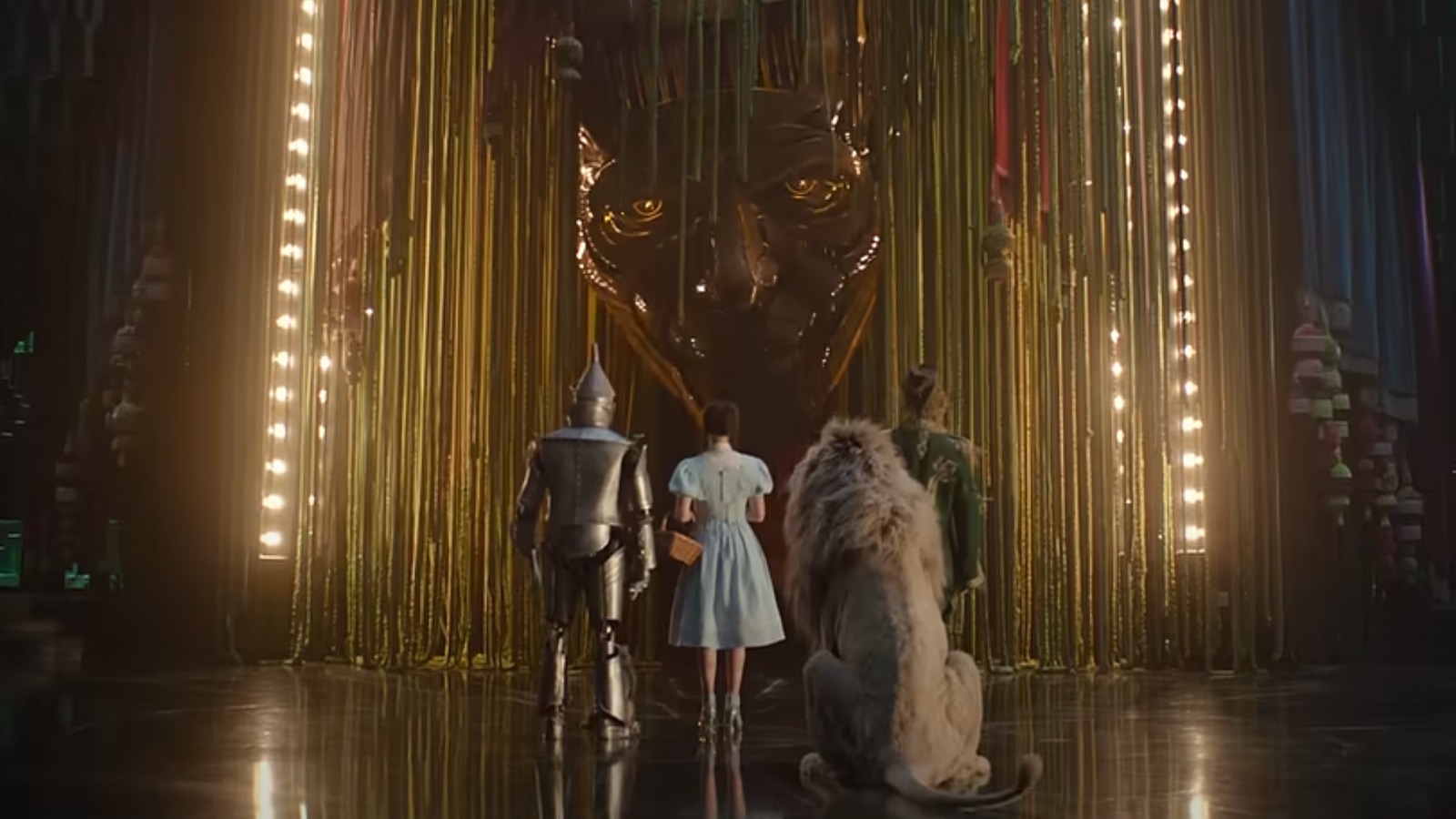
A Kansas breeze, a shadow on gingham, and a pair of unmistakable shoes. Wicked: For Good lands its final notes with a reveal that sends shivers through Oz — and gives Broadway purists a respectful, resonant bow.
Key Highlights:
• Dorothy’s cameo is brief by design, shown largely from the witches’ point of view
• The finale preserves the stage musical’s emotional twist while re-sculpting beats for cinema
• Glinda’s arc, the Wizard’s reckoning, and “For Good” anchor a faithful, heartfelt farewell
🎥 Full Movie Story
Wicked: For Good — Jon M. Chu’s second and concluding chapter in the two-part adaptation — brings the decade-defining Broadway musical home with a visually sweeping yet character-first focus. As Elphaba (Cynthia Erivo) and Glinda (Ariana Grande) move from fractured sisterhood to hard-won grace, the film lets the world’s most famous visitor to Oz slip in at the edges of the frame — exactly where the story needs her.
According to The Hollywood Reporter, Dorothy’s presence is calibrated to honor Wicked’s core perspective: Oz as seen through Elphaba and Glinda. The film keeps Dorothy mostly at a remove, leaning on suggestive imagery — the hem of a blue dress, a small dog at her heels, the glint of the iconic slippers — rather than pulling focus with a full introduction. It’s a nod to how the stage show treats Dorothy as the offstage catalyst who upends Oz while the witches’ friendship remains the heart of the narrative.
The climactic passages track closely with the Broadway template. The Wizard’s machinery is exposed. Madame Morrible’s power play collapses. Glinda embraces responsibility, not celebrity, and turns toward reform. And in a flourish designed to make fans clutch their programs, the film preserves the beloved twist: Elphaba’s “melting” isn’t the end — it’s her escape. Fiyero, transformed into the Scarecrow, reunites with her, and together they step into a future that Oz will never fully understand. The goodbye between Elphaba and Glinda — anchored by “For Good” — lands as the movie’s true curtain call, honoring the musical’s legacy without losing the cinematic scope Chu brings to the screen.
What changes? The film flexes scale — storms howl, crowds surge, and the politics of Oz feel both intimate and imposing — but it resists over-explaining the Kansas girl. Dorothy arrives as a fable made flesh, the final spark that forces Oz to face its truths. That restraint, as multiple outlets have noted, is the point: Wicked isn’t Dorothy’s story. It never was. It’s Elphaba and Glinda’s, and the movie ends where their bond — cracked but unbroken — can shine brightest.
Cynthia Erivo’s volcanic vocals and Ariana Grande’s crystalline turn showcase why the musical’s power endures. Jeff Goldblum’s Wizard and Michelle Yeoh’s Madame Morrible bring sly menace, while Jonathan Bailey’s Fiyero gives the romance its heartbeat. With Stephen Schwartz and Winnie Holzman adapting their own stage work, Wicked: For Good plays like a love letter to fans who have lived inside these melodies for two decades — and an accessible invitation to those discovering Oz anew.
💬 Social Media Reactions
- “The way Wicked: For Good shows Dorothy without making it her story? Chef’s kiss. The witches remain the whole point.”
- “Cried at For Good like it was 2003 all over again. Erivo + Grande = unstoppable.”
- “Dorothy’s cameo is perfect — iconic details, zero distraction. Respect to the Broadway blueprint.”
- “That reveal after the ‘melting’… AUDIBLE gasps in my theater. They nailed it.”
- “Goldblum’s Wizard is delightfully slippery. Yeoh’s Morrible? Ice cold.”
- “Jon M. Chu really staged Oz like a myth you can walk through. Scale + soul.”
- “Wicked 2 closes the loop with such care. Ending honors the musical without copying it shot-for-shot.”
🎞 Related Movie Context
- The films adapt the long-running Broadway hit Wicked, with the screenplays by original creators Stephen Schwartz and Winnie Holzman. The stage musical reframes The Wizard of Oz from Elphaba and Glinda’s perspective, with Dorothy largely at the margins — a storytelling choice the movie keeps.
- Dorothy’s role in Wicked is historically catalytic: her storm-borne arrival triggers political fallout in Oz, intertwining with the witches’ fates while remaining a parallel journey.
- Jon M. Chu’s two-part structure mirrors Wicked’s two-act theatrical rhythm, letting character beats — especially the complicated friendship — breathe at the scale of a holiday tentpole.
🔍 SEO Q&A Section
Q: How is Dorothy portrayed in Wicked: For Good?
A: Briefly and mostly from the witches’ perspective. The film uses visual cues (dress, dog, slippers) without shifting focus away from Elphaba and Glinda, per The Hollywood Reporter.
Q: Does Wicked: For Good keep the Broadway ending?
A: Yes. The film preserves the emotional twist surrounding Elphaba’s fate and centers the farewell embedded in “For Good,” while expanding the world cinematically.
Q: Do I need to watch the first Wicked film?
A: Absolutely. Part One sets up the relationships, politics of Oz, and musical motifs that culminate in Part Two’s payoffs.
Q: Who returns in Part Two?
A: Cynthia Erivo (Elphaba), Ariana Grande (Glinda), Jonathan Bailey (Fiyero), Jeff Goldblum (Wizard), and Michelle Yeoh (Madame Morrible), among others.
Q: Is Dorothy a major character here?
A: No. Her cameo is purposeful and limited — a respectful nod that keeps Wicked centered on the witches’ story.
🏁 Conclusion
When the last notes of “For Good” fade and Oz resets, Wicked: For Good leaves one question hanging in the emerald air: in a world that finally sees the truth, who gets to write the legend next?
📰 Sources
- Dorothy’s Cameo in ‘Wicked: For Good’ Explained — and How the Film’s Ending Honors the Broadway Classic
- Wicked the Musical — Official Story